Back to selected work

PayPal Customer Support

Challenge
Fragmented support touchpoints left customers without clear paths to resolution
Outcome
Increased self-service adoption and reduced regrettable contact volume through improved entry points and AI-personalized resolution pathways
My Role
Led design for purchase and account support experiences across consumer and merchant surfaces
Outcomes
Increased use of PayPal Assistant as a self-service channel through improved designs and additional entry points
Reduced regrettable contact volume as customers resolved issues more easily within the updated experience
Dramatically reduced time to resolution with a human agent, from hours to minutes, through the launch of live chat

I created the first ever view of the end-to-end customer support experience, helping product, engineering, operations, and business teams align around a shared understanding for the first time.

PayPal's support experience was fragmented across disconnected surfaces, each owned by a different team with its own goals and constraints. No one had ever stepped back to look at the full picture together. I initiated and led a cross-functional journey mapping effort that brought product, engineering, operations, and business teams into the same room, often for the first time, to look at the end-to-end customer support experience holistically.

That shared view became the connective tissue for everything that followed. Partners who had previously optimized in isolation could now see how their surface connected to the others, where customers were falling through the cracks, and what a more coherent experience could look like. It created the trust and shared language needed to do the harder work ahead.
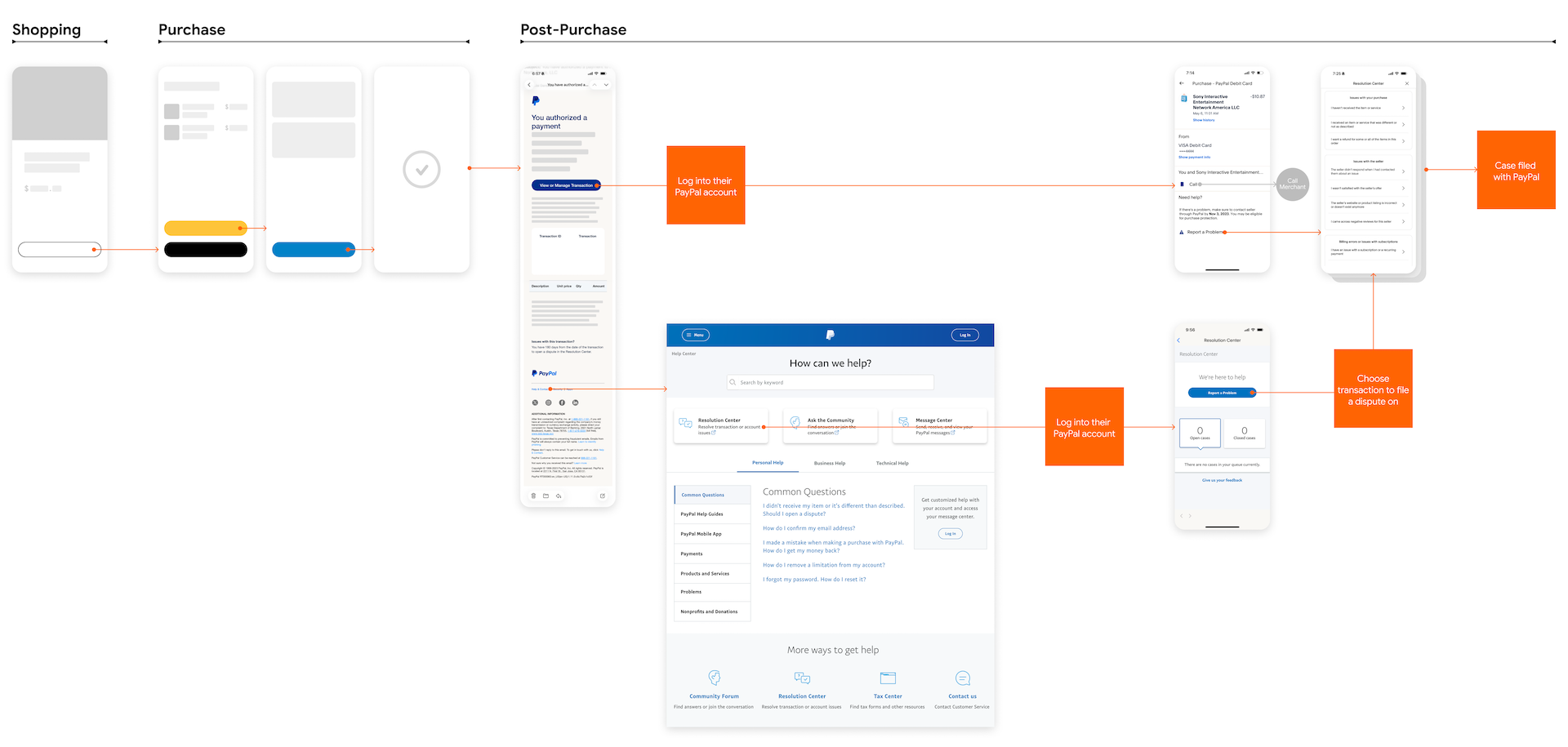
Current customer support journey map

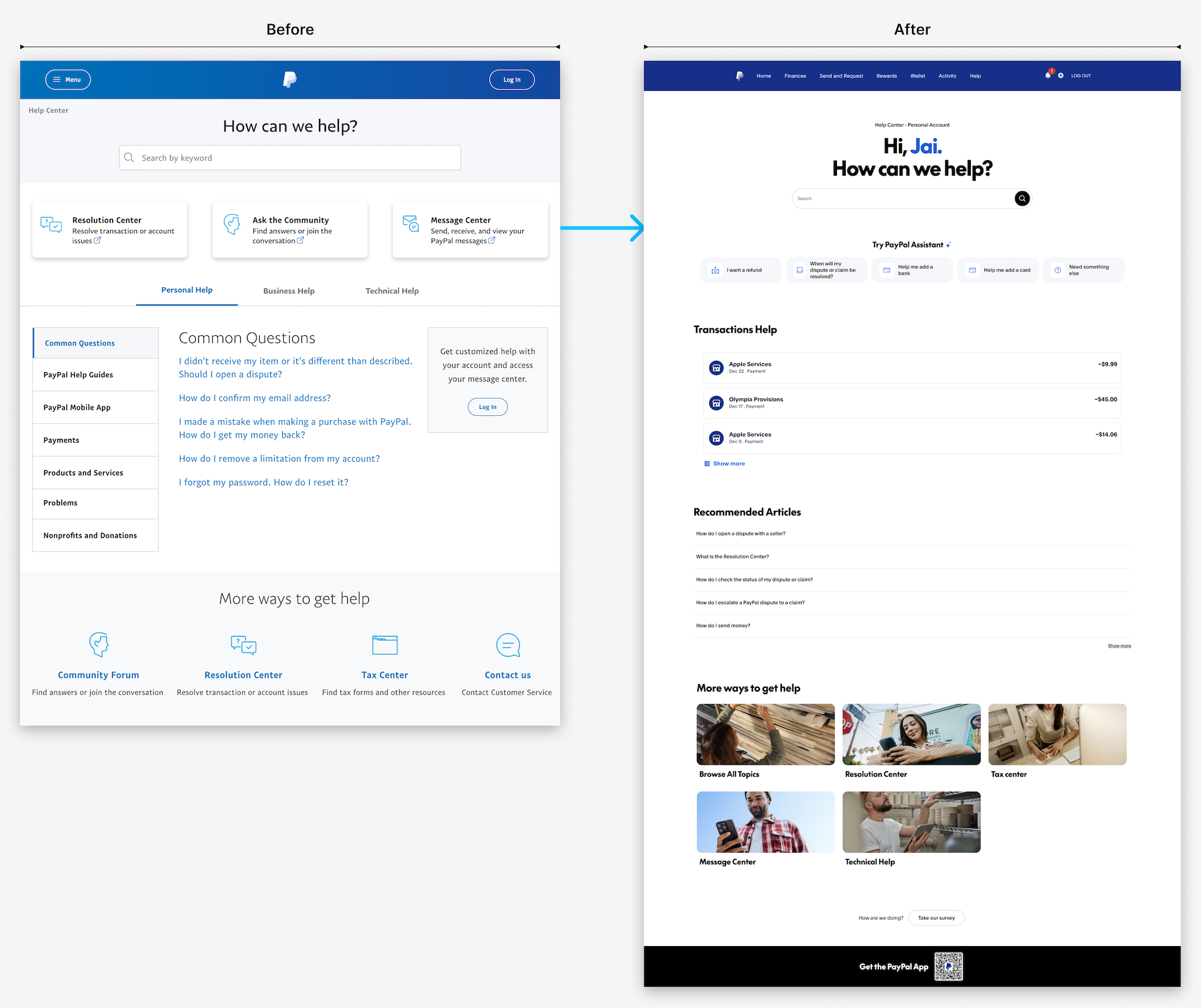
We transformed the Help Center from a passive article repository into a centralized support destination, converging content, statuses, resolution flows, and AI-powered entry points into a single, cohesive experience.

The Help Center originally focused on providing help articles and routing customers to contact channels for issues requiring more than self-service alone. Outside of those two options, customers had to navigate across disconnected dashboards to find the right post-purchase or account support they needed, with no sense of continuity or context between each help destination.

We reimagined the Help Center as a central hub where customers could see in-flight issue statuses, access resolution flows directly, receive personalized content suggestions powered by identity services, and reach PayPal Assistant's servicing AI from a single, cohesive location.

Help Center evolution

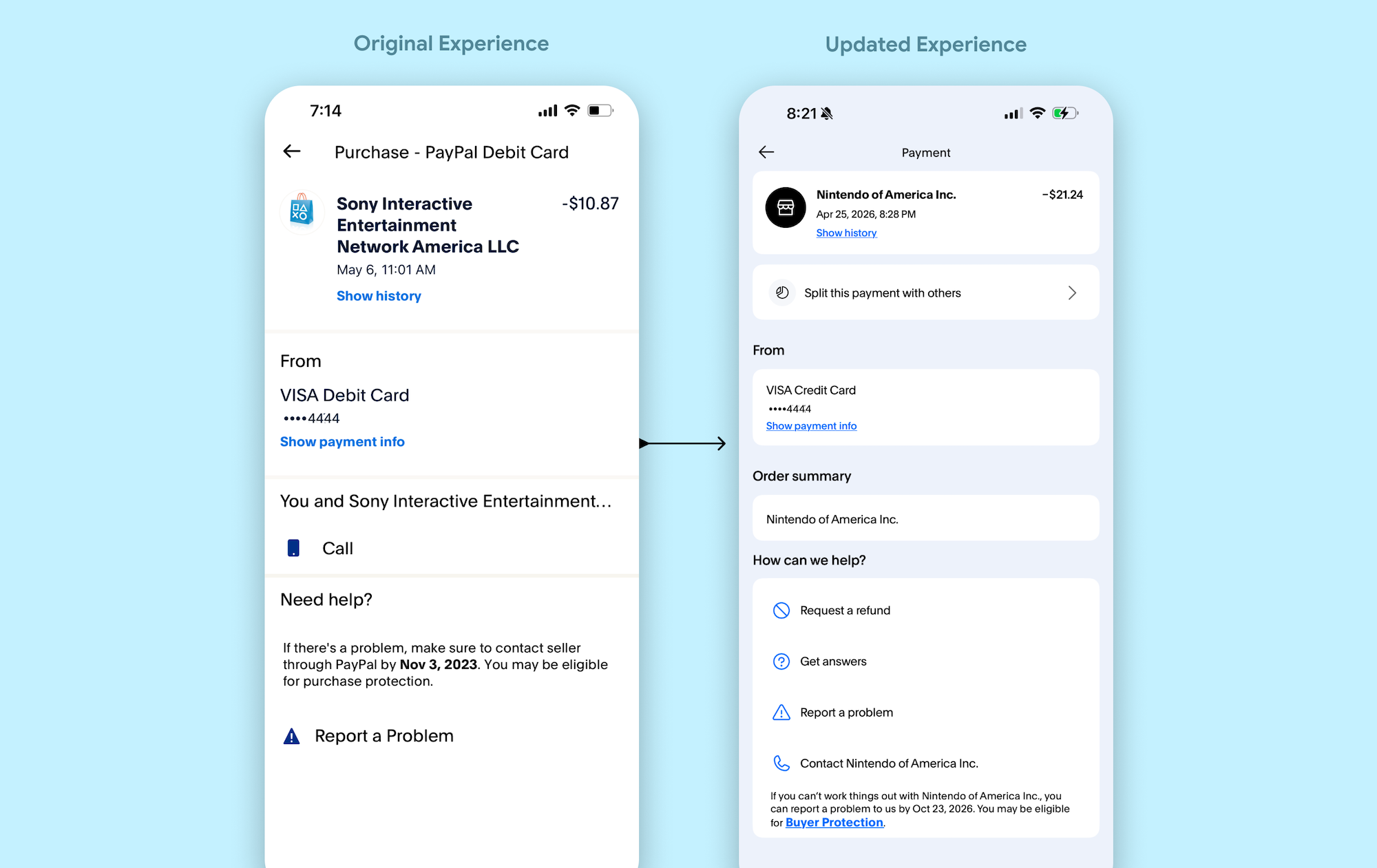
We introduced contextual support entry points directly within transaction details, catching customers earlier in their journey and reducing the need to search for help across disconnected surfaces.

Customers encountering issues with purchases or payments had no clear entry point for help within the account experience when looking at the details of a transaction. Their options were reaching out to the merchant directly, escalating the issue to PayPal in the form of a dispute case, or navigating away to find the right support center, which would ultimately give them similar options. Pivoting away from those one-size-fits-all approaches allowed us to provide options tailored to the specific transaction type. The result was a more relevant support experience that directly addressed known customer pain points and helped reduce regrettable contact volume.

PayPal in-product support entry points

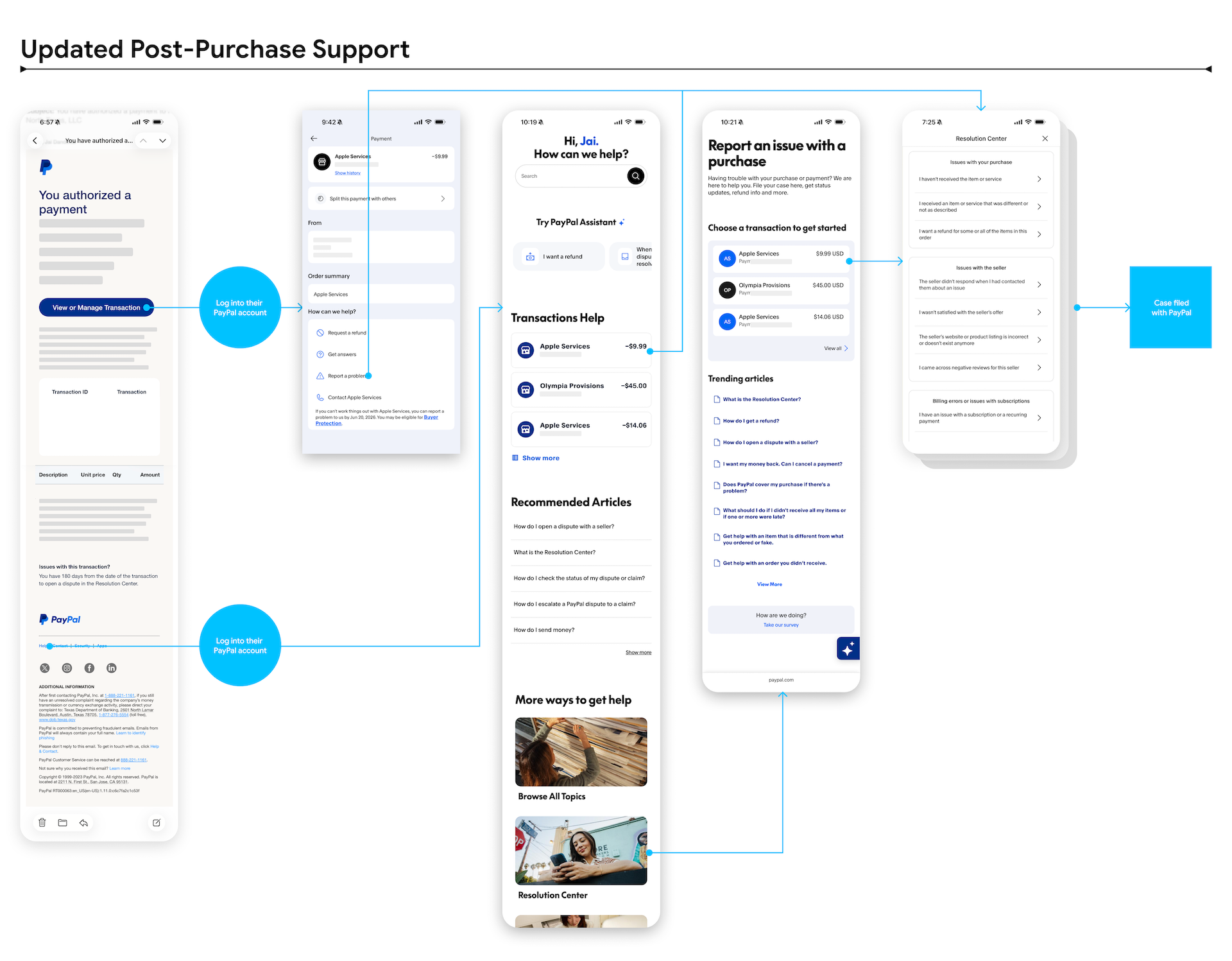
We created a more connected post-purchase support experience by redefining the relationship between support centers and routing customers more seamlessly.

By securing alignment with product leadership, we were able to reposition the role of support centers and communicate more effectively to users where to go and what resolution paths made the most sense based on their post-purchase issue. By converging so many different pieces of content within the Help Center and making it more of a central help hub, the other experiences naturally became extensions of it rather than standalone destinations as they originally were.

Updated customer support journey map

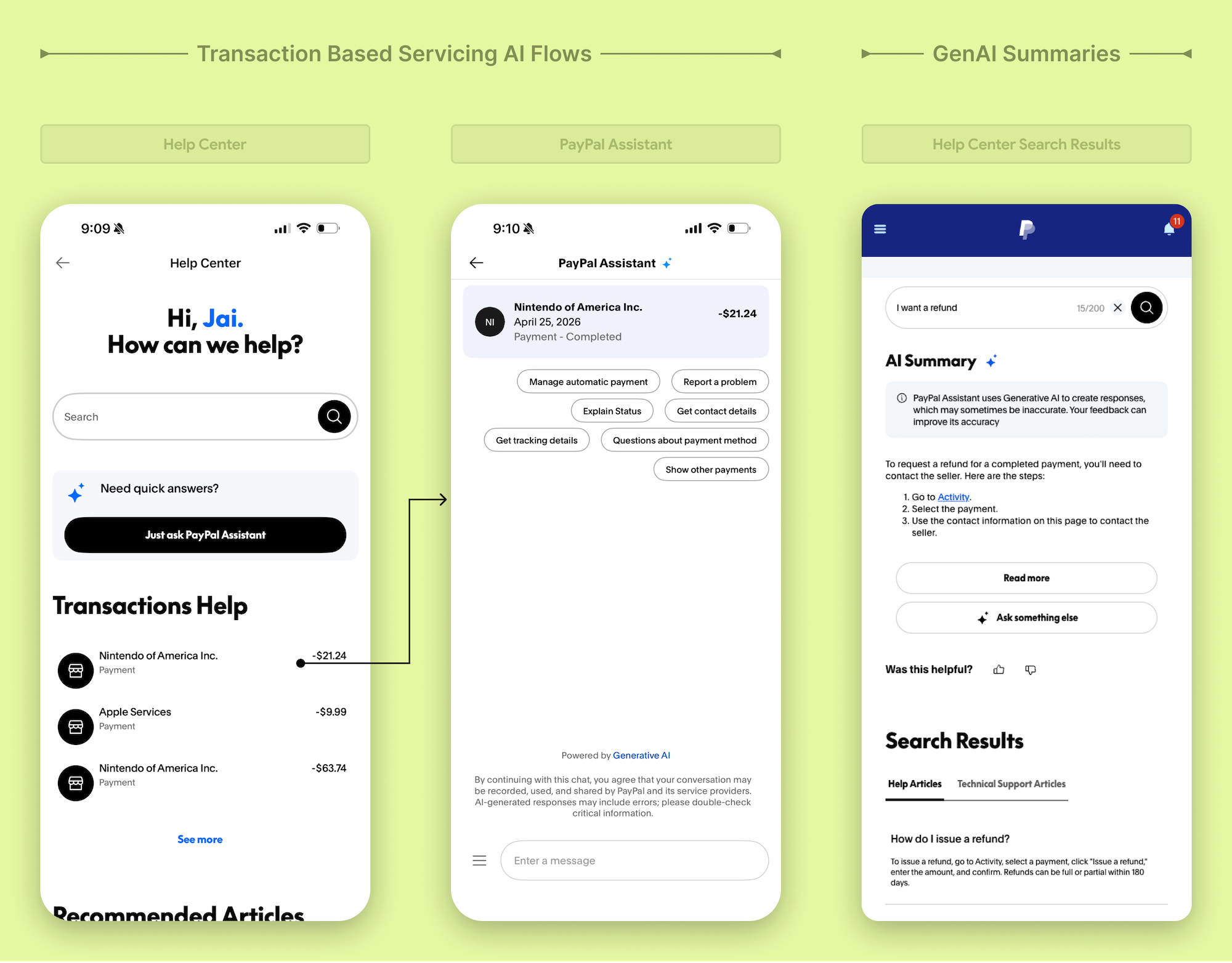
Strategically placed AI entry points within transaction-specific flows, combined with generative AI summaries in Help Center search results, increased resolution rate and meaningfully reduced customer effort.

Getting customers to the right answer faster required rethinking where and how AI entered the support journey. With the agentic platform in place, we identified the updated Help Center's new transactions help section as an opportunity to route customers to PayPal Assistant for self-servicing, rather than escalating to a dispute case with PayPal. Another surface where we found immediate traction was Help Center search results. Instead of forcing users to read through articles for the answer, generative AI summaries brought the answer directly to them based on their search query. The reduction in effort was immediate and measurable, with customers reaching resolution faster and with significantly less friction.

PayPal Customer Support AI resolution